We're Engineering The Future Of Industrial Growth!
Most industrial brands have world-class products but legacy sales engines. This guide will help you move beyond manual outreach using an integrated digital framework designed to capture, nurture, and close the next generation of buyers.
Scroll down to read the article...
The 2026 Industrial Growth Blueprint: 3 Systems to Modernize Your Sales Engine
Intro: The Evolution of the Industrial Buyer
For decades, the industrial sector has been built on the strength of a handshake, the reliability of a long-term referral, and the consistency of the annual trade show circuit. If you’ve built a successful business using those, you’ve done everything right. But lately, you might have noticed a shift: the phone isn't ringing quite as often, and the leads coming in feel "colder" or more price-sensitive than they used to. The reality is that your customers haven’t stopped buying, they’ve just changed HOW they buy. Now you need to adapt.

By implementing the 3 core pillars in this blueprint, you'll transform your legacy sales process into a predictable growth engine that gets your technical solutions in front of today's decision makers, ensuring a pipeline of high-value RFQs.

The New Face of the Decision Maker
The "Old Guard" of procurement is retiring. In their place is a new generation of decision-makers, Digital Natives who grew up with the world’s information in their pockets. These decision makers have a completely different psychological "trust trigger" than their predecessors. The way they consume content is also different. They're used to easily accessible websites with easily "skimmable" information. They aren't going to spend 40 minutes reading long paragraphs, they want to quickly skim the information, watch a video, and look at some photos to make their decision. If your marketing consists of large bodies of text on an outdated website, and few pieces of visual media like video, the viewer will never get the information they need to see you as a trustworthy expert.

The 70% Rule
Research shows that today’s B2B buyers complete nearly 70% of their decision-making process before they ever even reach out to a sales rep. They are auditing you online long before you even know they exist.

The "Legitimacy" Audit
To this new generation, if it isn't documented online, it didn't happen. They don't just want to hear that you have a 50,000 sq. ft. facility; they want to see a high-definition video walkthrough. They don't want to read a brochure; they want to see a case study via a social media post that proves you solve their specific pain points.
The Content Velocity Shift
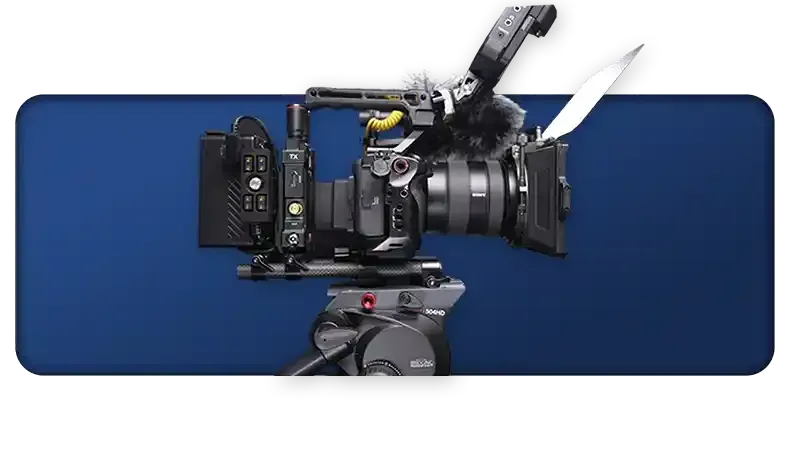
We are in an era of "fast-track" trust. These buyers are used to consuming high-impact visual content, videos, 3D renders, and interactive data. They use your digital presence, your website's content, and your social media activity as a proxy for your technical competence.
The bottom line: If your digital presence looks like it belongs in the last decade, today’s buyer assumes your capabilities are stuck there too.
In this guide, we aren't talking about curating an online presence for the sake of vanity. We are talking about building a Digital Sales Engine that mirrors the high-precision engineering you apply to your own products, meeting this new generation of buyers exactly where they are.
Pillar 1: Your Website (The 24/7 Salesperson)
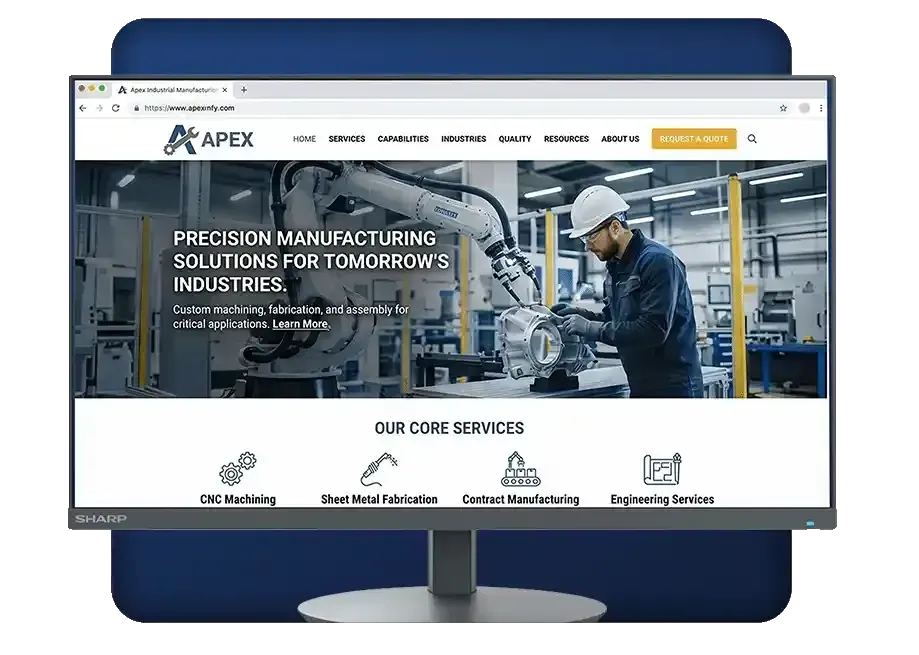
In the industrial world, your website is no longer just a digital brochure; it is your most senior sales representative. It never sleeps, it doesn't take vacations, and it is often one of the very first touchpoints your prospect interacts with. If that interaction is slow, confusing, or visually dated, the sales process is over before it even begins.
To win in 2026, your website must move beyond "existence" and toward conversion architecture.
A) Visual Authority: Showing Not Telling
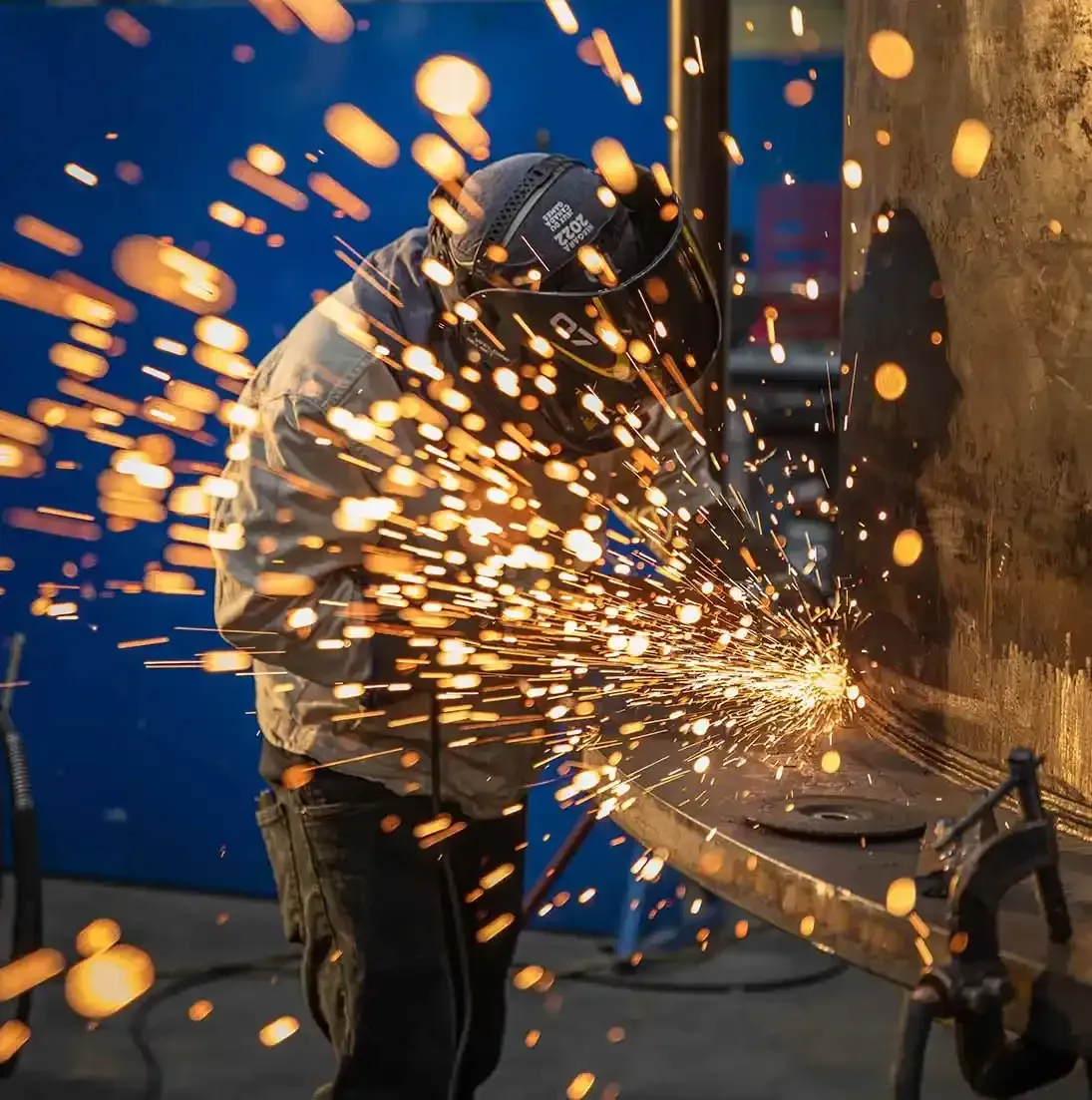
In an industry defined by precision and scale, "stock photos" are a liability. Today’s buyers want to see your CNC machines cutting metal, your team in action, and your real processes happening right in front of them.
The Visual Standard: High-fidelity video headers, 3D equipment renders, and crisp photography of your facility are non-negotiable.
The Logic: High-quality visual content acts as a proxy for your shop’s quality control. If you invest in the presentation of your brand, the buyer subconsciously assumes you invest equally in the quality of the products you produce.
B) SEO & The "Education First" Strategy
If a project manager is Googling or asking AI for a solution to a specific manufacturing bottleneck and your site is nowhere to be found, you don't exist to them.
The Power of the Blog: This isn't about "news" or company picnics. It’s about technical authority. By consistently publishing articles that solve specific industry problems, e.g., "How to Optimize Lead Times for Aerospace Components," you capture "intent-based traffic" actively searching for solutions.
Search Dominance: Strategic SEO ensures that when a prospect is in the research phase (that 70% of the journey we mentioned), your brand is the one providing the answers. If you can educate the market and answer their questions better than the competition, you will win every time.

C) Brand Consistency & Trust
Trust in B2B is built through repetition and professional cohesion.
The Cohesion Gap: If your company promises world-class service, but your LinkedIn is empty and your website looks like an antique, it creates "cognitive dissonance." The buyer feels a subconscious sense of risk when they inevitably visit your website.
The Fix: The concept of "world-class" needs to be embedded in every aspect of your brand identity; fonts, colors, messaging, and tone must be identical across every touchpoint. Consistency signals stability, and stability is what industrial buyers look for in a long-term partner.
D) User Experience (UX) as a Filter
A high-performance website must be engineered for the "Path of Least Resistance."
Speed & Mobile: Engineers on the plant floor often use tablets or phones. If your site takes 10 seconds to load or isn't mobile-responsive, creating a confusing layout, they will bounce to a competitor where the information they need is easier to find.
Frictionless Conversion: Your website needs to be built with your customer in mind. Every page should have a clear, singular goal, based on what the user wants when they go to any given page. Whether it’s "Download the Technical Specs" or "Request a Technical Evaluation," the path from curiosity to contact should be seamless and intentional.

The Reality Check: Most industrial firms treat their website as a "one-and-done" project. In reality, it is a living engine that requires regular content updates, technical maintenance, optimization, and SEO monitoring to stay at the top of the search results. If you aren't treating your site like a piece of Tier-1 machinery, you're leaving your lead generation to blind chance.
Pillar 2: CRM Integration (The Single Source of Truth)
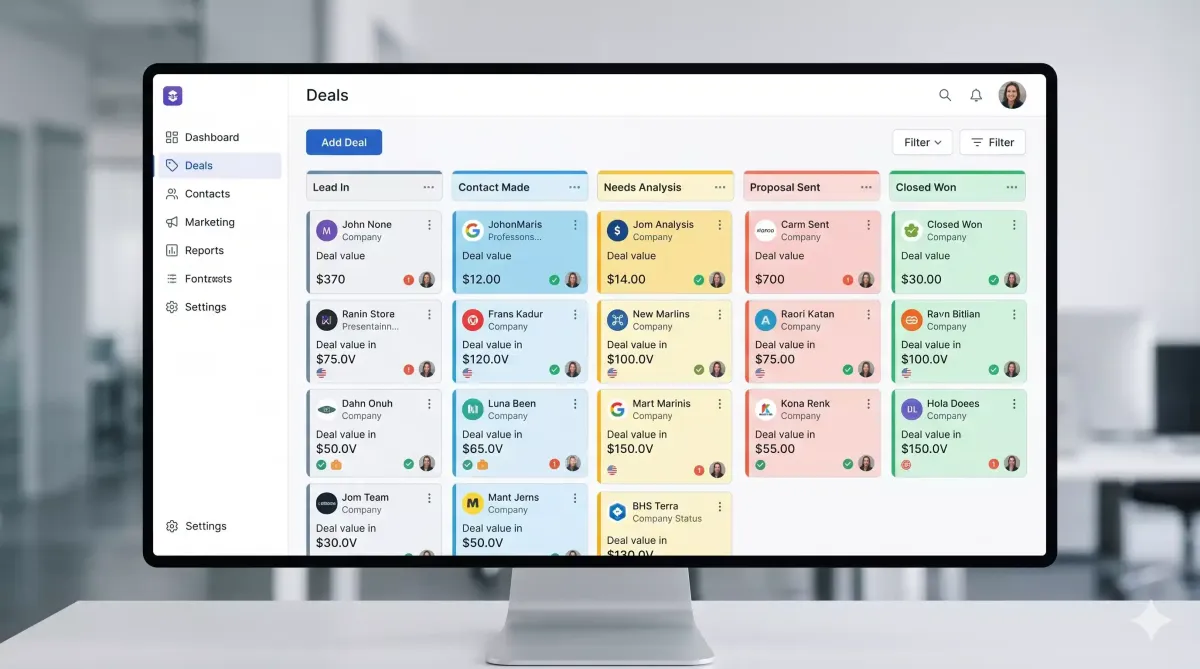
In the industrial sector, the "cost of a lost lead" is astronomical. When a six-figure contract is on the line, relying on a sales rep’s memory or a scattered spreadsheet isn't just inefficient, it’s a business risk.
Modernizing your sales engine means moving away from manual entry and toward an Integrated CRM (Customer Relationship Manager) Environment. This is the "brain" of your operation that connects your marketing efforts to your bottom line. An example of popular CRMs would be HubSpot, Salesforce, and Go High Level.


A) Eliminating the "Black Hole" of Sales
Without a CRM, leads often enter a "black hole." A prospect fills out a form, an email is sent to an inbox, and then… silence.
The Solution: Automated Lead Routing. The moment a prospect engages with your website, they are instantly logged, categorized by industry, and assigned to the correct technical sales rep.
The Result: Speed-to-lead is a competitive advantage. Responding to an inquiry in 5 minutes versus 5 hours can be the difference between winning the RFQ and being ignored.
B) Long-Cycle Nurturing (The "Slow Burn")
Industrial B2B sales cycles often span 6, 12, or even 18 months. It is much harder for a human to manually follow up with multiple prospects at the perfect cadence.
Smart Automation: Your CRM should trigger automated "check-in" emails that share new case studies or equipment updates based on the prospect's specific interests.
Stay Top-of-Mind: When that prospect is finally ready to pull the trigger on a capital expenditure, your brand is the one that has been consistently providing value in their inbox for a year.
C) Data-Driven Decision Making
A modernized CRM provides a "Single Source of Truth" for leadership. You no longer have to guess which marketing channels are working.
Attribution: You can track a lead from the first time they watched a video on LinkedIn to the blog post they read to the final "Request for Quote."
Pipeline Visibility: At any moment, you should be able to see the total dollar value of your open quotes and exactly which stage of the "buy" they are in, from discovery to technical review to final signature.
D) Centralized Communication History
Industrial sales involve multiple stakeholders, procurement, engineering, and C-suite.
The Shared Context: A CRM ensures that if a sales rep leaves the company or is out for the day, the rest of the team knows exactly what was promised to the client. Every email, phone call log, and technical drawing sent is stored in one profile.
No more digging through inboxes and scrolling through text message chats to remember what happened 3 months ago. Everything is all in 1 place that the entire sales team can reference at any point.
The Reality Check: A CRM is only as good as the data inside it. Most industrial firms fail here because they buy the software but don't build the processes to support it. Mapping out your "Sales Workflow" is 90% of the battle; the software is simply the engine that runs it.
Pillar 3: Outreach (Hunting For Your Ideal Customer)

In the industrial world, "outreach" used to mean cold calling or waiting for the phone to ring after a trade show. Now, that strategy is a recipe for stagnation. Modern B2B outreach is multichannel; it’s about being present wherever your prospect is looking, ensuring your brand stays top-of-mind and consistently provides value everywhere you show up, without being intrusive. When they check their email, you're there. When they go on LinkedIn, they see your content. When they search Google or ask AI for solutions, you show up.
Great sales and marketing happen when 3 things are in alignment: the right message to the right person at the right time. But here's the catch, you're never going to know the exact moment someone is ready to buy, but when you show up, provide value, and build trust consistently, you end up showing up at the right time.
The goal isn't to "spam" the market; it’s to build a surround-sound effect of value, authority, and trust. Without it, you're invisible and invisibility is a liability.
A) LinkedIn: The Digital Trade Show Floor
For industrial brands, LinkedIn is a major social platform that can truly move the needle. It's where industry professionals go to keep a pulse on the industry, network with like-minded people, and show off their accomplishments. That's your opportunity to connect with others, start a conversation, and use the content you post to provide value throughout those conversations.
The Authority Loop: Instead of posting a once-a-year "Happy New Year," post high-value trust signaling content. Show a 30-second time-lapse of a complex assembly or a "Lessons Learned" video from a recent project.
Employee Advocacy: When your technical team shares their expertise, it humanizes the brand. People buy from experts they recognize and trust, not faceless corporations.
The "Lurk" Factor: Remember, the new generation of buyers "lurks" before they leap. They may never "like" your post, but they are watching, and when you show up on a consistent basis, they remember. When you finally reach out, you aren't a stranger; you're a familiar expert. Or better yet, when they realize they need a solution, your content comes up, and now you're top of mind at the perfect time.
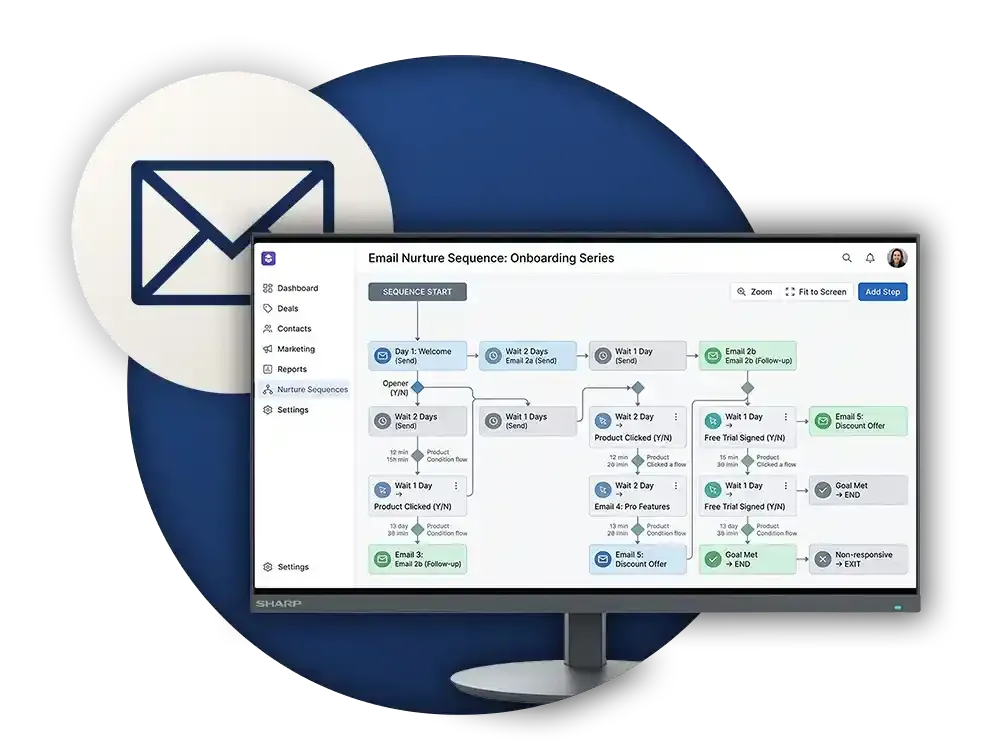
B) Strategic Email Marketing (The Nurture Engine)
If your website is the salesperson and the CRM is the brain, email is the bloodstream. It keeps the relationship alive over long sales cycles.
Educational Sequencing: Instead of a generic monthly newsletter, send targeted "Value Drops." If a prospect downloaded a spec sheet for a specific machine, your emails should follow up with case studies specifically about that machine’s ROI.
The "Personal" Touch at Scale: Using your CRM data, you can send automated personalized outreach emails at scale. "Hey [Name], I saw you were looking at our latest report and thought you’d find this breakdown of the new alloy standards helpful."
Retaining Mindshare: In a 12-month procurement cycle, the brand that provides the most consistent value is the one that gets the final call because they've demonstrated the most experitse and thus have built the most trust.
C) Content Creation: Quality Over Quantity
The industrial buyer has a high "BS detector." They don't want "generic" content; they want technical proof.
Visual Storytelling: Show the massive scale of your facility, your machines, your processes, your capabilities, and your team of experts in action. Instead of just telling people you can do X, Y, and Z, show them, because seeing is believing. A picture speaks a thousand words, and a video speaks a million; that's your proof that you can do what you say you can.

The Content Multiplier: Even just one high-quality blog post for your website can be repurposed as...
LinkedIn & YouTube posts for SEO and inbound traffic
Website & LinkedIn Photos
Educational content you can send to prospects during your sales outreach
Case Studies
Tradeshow background videos
Assets for print media & brochures
D) The Surround-Sound Effect
"Multichannel" means your prospect sees a helpful post on LinkedIn, receives a capabilities brochure PDF via email two days later, and sees a case study video on YouTube when they’re researching a problem. By the time they talk to your sales team, the "selling" is already done. You spend less time explaining your value since they already know from their research.
The Reality Check: Most industrial companies treat social media as a chore and email as a broadcast. The leaders treat both as a strategic dialogue. If your outreach doesn't provide value before the "ask," you aren't building a pipeline; you're just making noise.

Putting It All Together: The Integrated Funnel
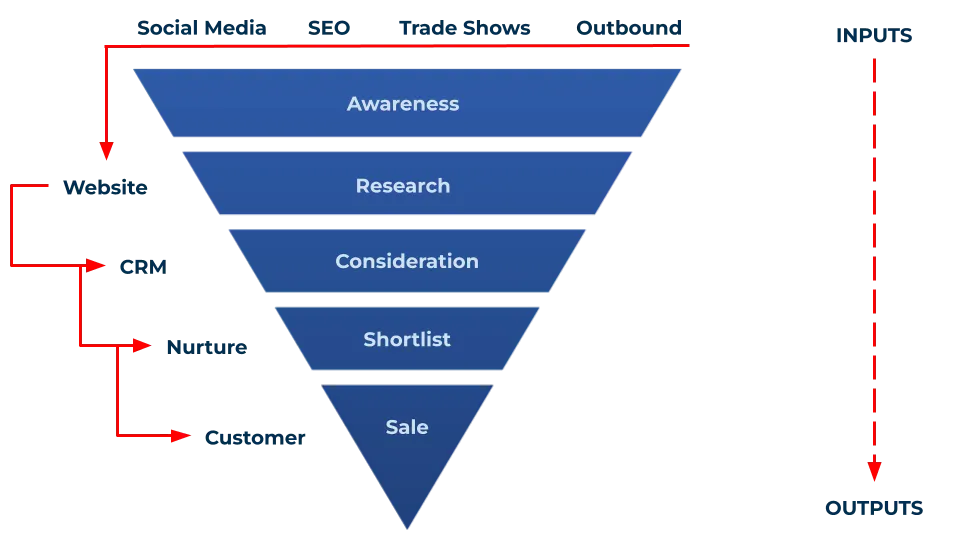
In many industrial firms, marketing, sales, and production operate as three separate gears that barely touch. Marketing generates "names," sales makes "calls," and production handles "orders." But in a modernized organization, these aren't separate gears, they are a single, continuous flywheel.
The "funnel" is the technical connective tissue that ensures Pillar 1 (Website), Pillar 2 (CRM), and Pillar 3 (Outreach) don't just exist; they collaborate. When these systems are linked, the engine begins to build its own momentum. The more you feed the funnel, the more efficient it becomes, and the less manual force you have to apply to secure a new contract.
The Industrial Growth Blueprint solves this by turning your website, CRM, content, and outreach into a single, synchronized "flywheel." In this system, high-value social media content acts as your digital billboard; combined with targeted outreach, you attract ideal buyers and drive them to a website, your digital storefront, which has been engineered for conversions. Once they engage, your CRM captures their data and triggers an ongoing follow-up sequence that nurtures the relationship based on their specific technical interests until they become a customer.

To keep this engine running at peak performance, you maintain a consistent LinkedIn presence and proactive outreach to new prospects, continuously injecting "fresh fuel" into the system. This ensures that while your automated sequences handle the long-cycle nurturing, your brand remains highly visible and actively attracts new high-value opportunities into the funnel. By linking these systems, you create a self-sustaining ecosystem that allows you to stop "chasing" one-off sales and start running a high-precision growth engine that dominates your market 24/7.
Want Us To Implement This Exact System Into Your Business?
Book a Call With Us Today!

"We build and implement these exact systems for industrial B2B companies, helping them turn fragmented and unpredictable sales into a consistent sales and marketing growth engine."
Noah Fainer
Growth Strategist & Founder at Digital Imprint

Developed By Digital Imprint — All Rights Reserved ®
14935187 Canada Inc. is operating as Digital Imprint